
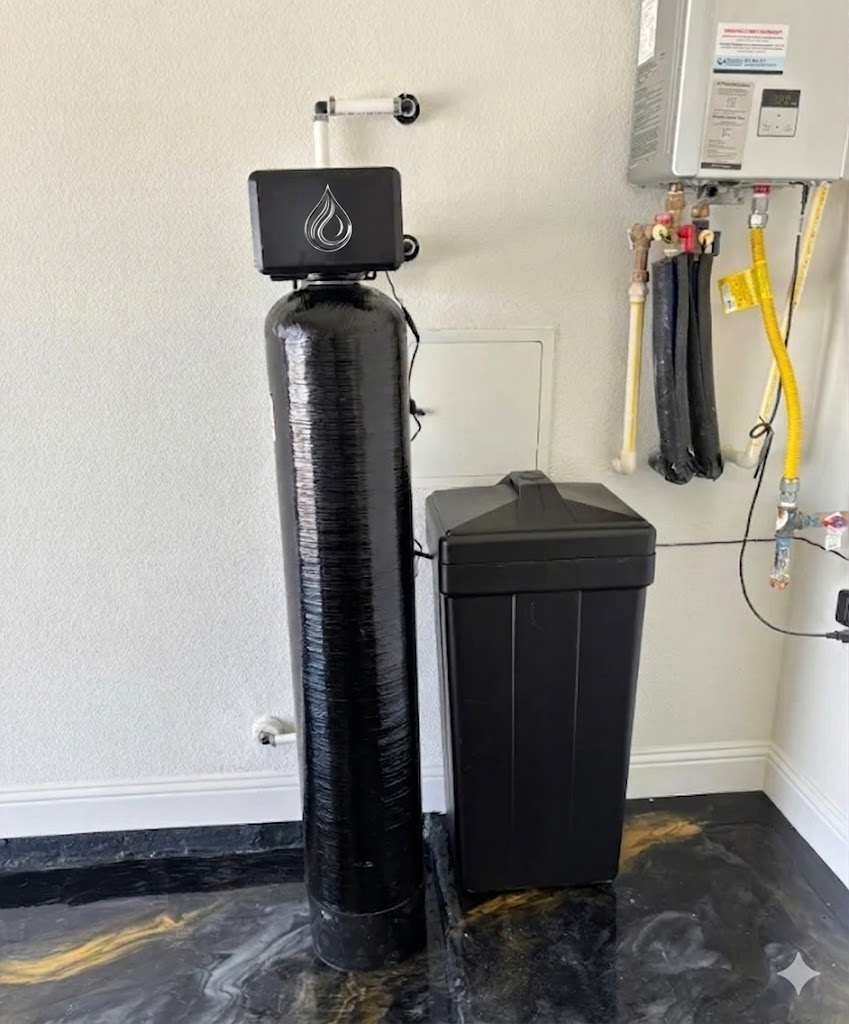
Water Softeners, Sized for Your Home
Hard water is the most common water complaint in Michigan, on wells and on city water alike. A correctly sized, metered softener protects plumbing and appliances and makes a noticeable difference at every tap.
What a softener actually does
Hardness is dissolved calcium and magnesium. A softener passes water through resin that exchanges those minerals out, then periodically rinses the resin with brine to reset it. That is the entire mechanism.
It is also why a softener on its own does nothing for chlorine, iron or sulfur. Those need their own treatment stage, which is why sizing conversations always start with a test.
What hard water costs you
Scale builds inside water heaters and reduces both efficiency and lifespan. It shortens the life of dishwashers, washing machines, coffee makers and ice makers. It also means using more soap and detergent than necessary for the same result.
None of that is dramatic on any single day. Over ten years in a house, it adds up.
Sizing is the whole job
Capacity is based on hardness level, iron content, number of people in the home and actual water usage. Undersized units regenerate constantly and wear out early. Oversized units cost more than they need to and can sit too long between regenerations.
A metered valve regenerates based on water actually used rather than a timer, which is what keeps salt consumption reasonable.
On well water, position matters
If there is iron in the water, iron filtration goes ahead of the softener so the resin is not fouled. Installing a softener first on an iron-heavy well is the most common mistake we find, and it quietly destroys the unit's capacity.
Pricing
Softener-only installations are priced on hardness level, iron content, capacity required and the plumbing configuration in your home. Complete packages pairing a softener with whole-home filtration start around $2,750 installed on city water.
After the free in-home water test you receive one clear installed price in writing — equipment, labor and startup included.
Get My Water Looked At