
Hard Water Treatment in Michigan
Hard water is the most widespread water complaint in Michigan, on private wells and municipal supply alike. It is dissolved calcium and magnesium, and it leaves evidence everywhere in a house.
How to tell you have it
Crusty white buildup around faucet aerators and on shower doors. Glassware that comes out of the dishwasher spotted no matter what you use. Soap and shampoo that need more product for less lather. Towels that feel stiff. A water heater that seems to run out sooner than it used to.
Any one of those on its own could be something else. All of them together is hardness.
Why Michigan water is hard
Limestone-rich geology. Water moving through it picks up calcium and magnesium, and those minerals arrive at your house dissolved. Municipal treatment is not required to remove them, and a private well has no treatment at all before the house.
This is why hardness shows up on both city and well water throughout the state.
What it actually costs
Scale accumulates inside the water heater and reduces its efficiency and lifespan. It shortens the working life of dishwashers, washing machines, ice makers and coffee equipment. It means using more soap and detergent for the same result.
Individually small. Over a decade in one house, not small.
How hardness is treated
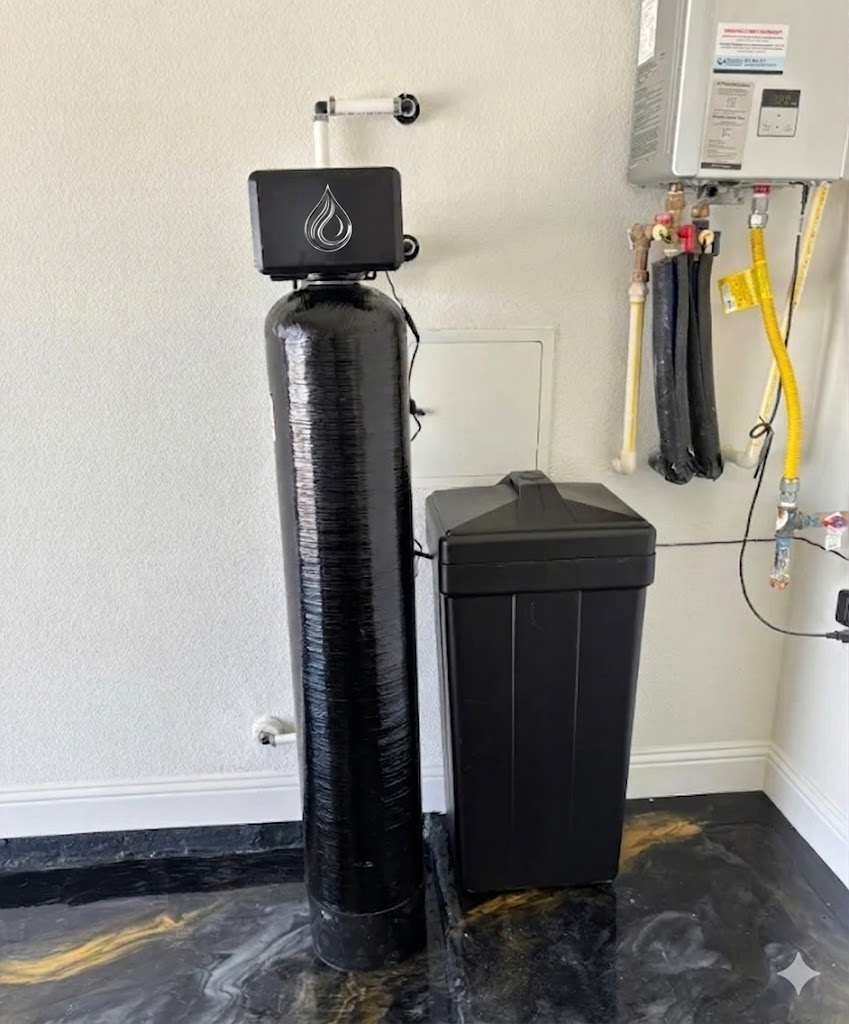
A metered water softener, sized to your measured hardness and household usage. Ion-exchange resin swaps the hardness minerals out, and the unit rinses that resin with brine periodically to reset.
The two things that make the difference between a softener that lasts and one that does not are correct sizing and correct position in the system — particularly on well water, where iron has to be removed first.
Pricing
Softening is part of every complete system we install. City-water packages start around $2,750 installed and well-water packages start around $3,850 installed.
Softener-only replacements are quoted on measured hardness, iron content and your plumbing configuration.
Get My Water Looked At