
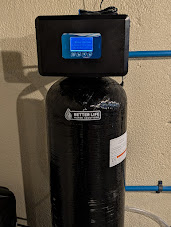
Well Water Treatment in Michigan
If you are on a private well, nobody is treating your water before it reaches the house. That is the whole difference. We test what is actually coming out of your well and build a system around those numbers.
What well water usually looks and smells like here
Michigan sits on limestone-rich geology, so most private wells produce hard water carrying dissolved iron, and very often hydrogen sulfide. The symptoms show up in a predictable order: orange or brown staining in toilets and tubs, a rotten-egg smell that is worse on the hot side, white scale on fixtures, laundry that comes out dingy, and grit at the bottom of a glass.
Depending on well depth and location, manganese (black or purple staining) and fine sediment can show up too. None of this is unusual for a Michigan well, and none of it is unsolvable.
How we evaluate a well
We test the water in your home before recommending anything. Hardness, iron, pH, sulfur indicators and TDS take a few minutes to measure, and they decide the equipment. Guessing at this stage is how homeowners end up with a system that treats the wrong problem.
We also look at the well pump's flow rate and the space you have available. Backwashing filters need a certain amount of flow to clean themselves properly. A system that cannot backwash is a system that fails in eighteen months, so this is not a detail we skip.
The order equipment goes in
- Sediment prefiltration to catch sand and grit from the pump
- Iron, manganese and sulfur filtration to remove staining and odor
- A metered water softener sized to the measured hardness
- Under-sink reverse osmosis for drinking and cooking water
Why order matters more than brand
Sending iron-heavy water straight into a softener will foul the resin, usually within a year. The softener still runs, but its capacity quietly collapses and the homeowner assumes the unit was junk. It was not — it was installed in the wrong position.
This is the single most common problem we find in existing well systems, and it is the reason we start with testing rather than a product catalog.
How installation works
Installation is performed by licensed plumbers. Most well systems take part of a day. We set the equipment, plumb the bypass, run the drain line, program the control valve to your actual water and usage, and walk you through what to expect over the first week.
You get one installed price in writing before any work starts.
Pricing
A common dual-tank well package — iron and sulfur filtration followed by a properly sized softener — starts around $3,850 installed.
Homes with heavier iron, high sulfur or unusual plumbing may need additional stages. We test the water and look at the install area before quoting, and the complete installed price is in writing before work begins.
Get My Water Looked At