
Whole-House Water Filtration
A pitcher filter treats one jug. A fridge filter treats one door. Whole-house filtration treats the water where it enters the home, so every shower, every faucet and every appliance gets the same water.
Why point-of-entry rather than point-of-use
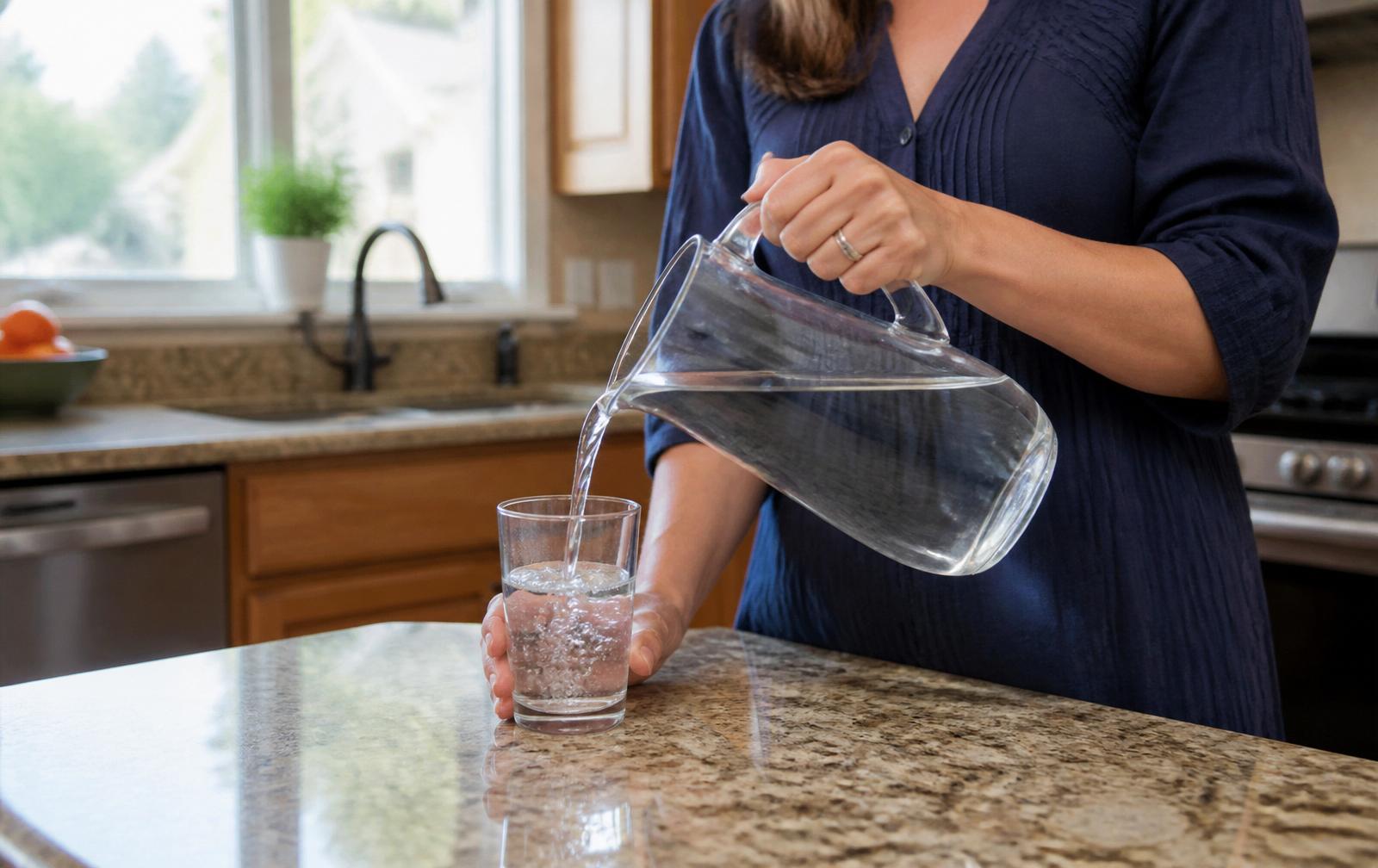
Point-of-use filters — pitchers, fridge lines, faucet units — are fine for drinking water and nothing else. They do not touch the water in your shower, your washing machine or your dishwasher.
Whole-house filtration sits at the point of entry, so the same treated water reaches everything. For chlorine in particular, this matters: a hot shower is where most people notice chlorine most.
What goes into a whole-home system
On municipal water, that is usually carbon-based media for chlorine taste and odor, often with sediment prefiltration, paired with a softener for hardness.
On a private well, the filtration stage is doing a different job — removing iron, manganese and sulfur — and the media selection changes completely based on your test results.
Sizing and flow
A filter tank has to be sized to the home's peak flow. Undersize it and you get pressure drop when two showers run at once. Backwashing filters also need enough flow to clean their own media, which is a real constraint on some well systems.
We check flow rate and available space before recommending a tank size.
How we evaluate
We test the water in your home before recommending anything. Hardness, iron, pH, sulfur indicators and TDS take a few minutes to measure, and they decide the equipment. Guessing at this stage is how homeowners end up with a system that treats the wrong problem.
Pricing
Whole-home filtration is normally quoted as part of a complete system. City-water packages start around $2,750 installed and well-water packages start around $3,850 installed.
The recommendation follows the test results and your home's flow rate. One installed price in writing, before work begins.
Get My Water Looked At